
An evidence-based assessment framework, with the inputs the desk actually uses.
The review page does not publish a star rating, a winner declaration, or a paid placement. The review framework breaks the assessment into eight inputs: product identity, features, costs, rules, safety, support, limitations, and unresolved questions. The same eight inputs work on any platform.
On this page
Input 1: product identity
Product identity is the legal entity behind the platform. The product identity should be verifiable through the platform's terms page, and it should match the publisher name on the app store listings. The desk's position is that product identity is the first input to read, and a platform that does not clearly state its product identity is a signal to slow down.
Input 2: features
Features are the product capabilities the platform offers. The desk's review framework reads features as inputs, not as differentiators. A platform with a wider feature set is not necessarily a better platform; a platform with a focused feature set that does what it does well is often a better platform than a platform with a wider feature set that does each feature poorly. The desk's recommendation is to read the features in the context of your own use case, not in the abstract.
Input 3: costs
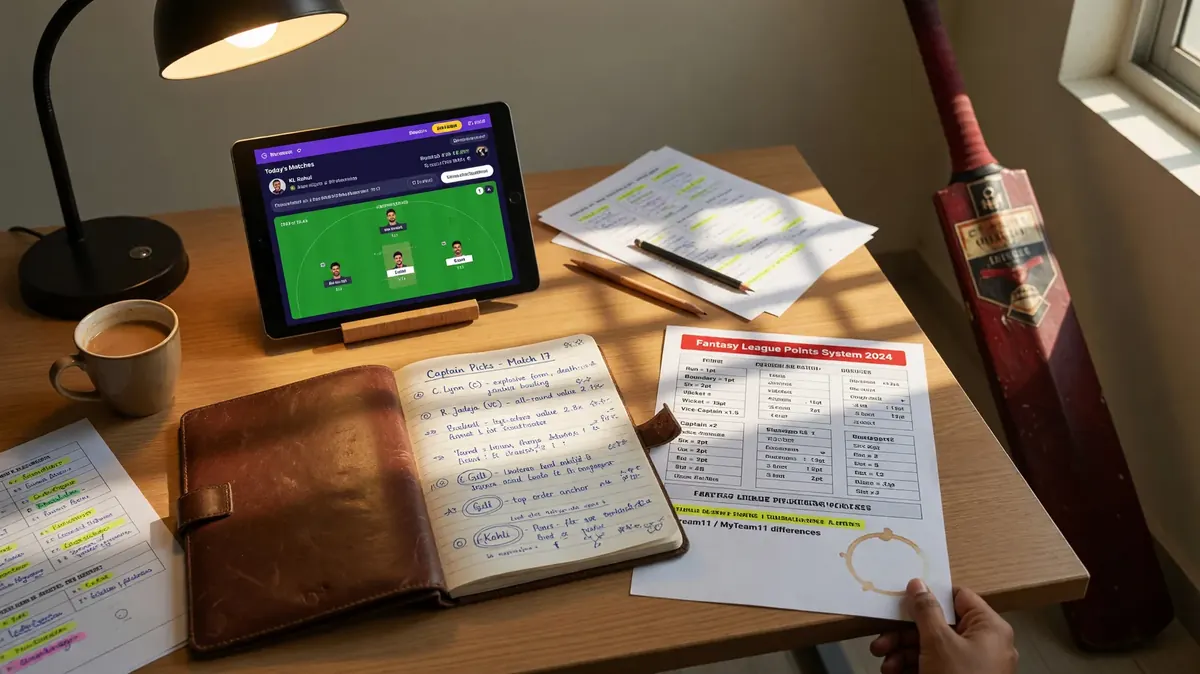
Costs are the entry fees, the deposit minimums, the withdrawal fees, and any other charges the platform imposes. The desk's review framework reads costs as a total, not as a line item. A platform with a low entry fee but a high withdrawal fee is more expensive than a platform with a higher entry fee but no withdrawal fee. The desk's recommendation is to read all four cost inputs before you fund a wallet.
Input 4: rules
Rules are the eligibility, the scoring system, the contest structure, and the responsible-play tools. The desk's review framework reads rules as a set, not as a single input. A platform with a clear eligibility clause, a published scoring system, a transparent contest structure, and a responsible-play section is a more reputable platform than a platform that omits any one of these. The desk's recommendation is to read the rules before you sign up, and to confirm the rules are consistent with your own use case.
Input 5: safety
Safety is the account-security infrastructure: the password policy, the two-factor authentication, the session management, and the data-encryption policy. The desk's review framework reads safety as a set, not as a single input. A platform with a strong password policy, a two-factor authentication option, a session management policy, and a data-encryption policy is a more reputable platform than a platform that omits any one of these. The desk's recommendation is to enable every safety feature the platform offers.
Input 6: support
Support is the customer-care infrastructure: the email support, the chat support, the phone support, and the help-centre documentation. The desk's review framework reads support as a set, not as a single input. A platform with email support, chat support, phone support, and a help centre is a more reputable platform than a platform that offers only one of these. The desk's recommendation is to read the support channels before you sign up, and to confirm the support hours are consistent with your own use case.
Input 7: limitations
Limitations are the things the platform does not do, or the things the platform does poorly. The desk's review framework reads limitations as honestly as features. A platform that does not offer phone support is limited; a platform that offers phone support but does not staff it on weekends is limited in a different way. The desk's recommendation is to read the limitations in the context of your own use case.
Input 8: unresolved questions
Unresolved questions are the inputs the desk has not been able to verify. The desk publishes a list of unresolved questions at the end of every review, and updates the list when a question is resolved. The desk's position is that unresolved questions are not a reason to dismiss a platform, but they are a reason to read the rest of the review more carefully.
Eight inputs, one framework, one habit: read the framework before you sign up.
Pair the review framework with the customer-care page
The review tells you what the platform does. The customer-care page tells you how the platform responds when something goes wrong.
Affiliate disclosure: the button above routes through a first-party redirect. The desk may earn a small commission if you sign up.
How to read a review on a platform you have never used before
A new review is a review the desk has not covered. The desk's reading of a new review is conservative: read the product identity, read the features, read the costs, and read the rules. The four reads are the inputs the desk recommends, and the inputs are the difference between a guess and a bet. The desk does not publish a hot take on a new review, and the desk does not recommend a specific platform without the four reads. The reason is the same: a hot take is a guess, and a guess is not the product.
How the desk handles a review that omits a category
A review that omits a category is a signal to slow down, not a signal to dismiss. The desk's reading of an incomplete review is conservative: read the category that was omitted, read the inputs the desk recommends, and read the corrections log. The three reads are the inputs the desk recommends, and the inputs are the difference between a guess and a bet. The desk publishes a correction when an omitted category is verified, and the correction is the input the desk recommends reading.
How to read a review that uses vague language
A review that uses vague language is a signal to slow down, not a signal to dismiss. The desk's reading of a vague review is conservative: read the specific terms, read the inputs the desk recommends, and read the corrections log. The three reads are the inputs the desk recommends, and the inputs are the difference between a guess and a bet. The desk publishes a correction when a vague review is verified, and the correction is the input the desk recommends reading.
How the desk handles a review that ignores the limitations
A review that ignores the limitations is a signal to slow down, not a signal to dismiss. The desk's reading of a no-limitations review is conservative: read the limitations, read the inputs the desk recommends, and read the corrections log. The three reads are the inputs the desk recommends, and the inputs are the difference between a guess and a bet. The desk publishes a correction when a no-limitations review is verified, and the correction is the input the desk recommends reading.
How to read a review that ignores the unresolved questions
A review that ignores the unresolved questions is a signal to slow down, not a signal to dismiss. The desk's reading of a no-unresolved-questions review is conservative: read the unresolved questions, read the inputs the desk recommends, and read the corrections log. The three reads are the inputs the desk recommends, and the inputs are the difference between a guess and a bet. The desk publishes a correction when a no-unresolved-questions review is verified, and the correction is the input the desk recommends reading.
How the desk handles a review on a day with no matches
The desk does not publish a review update on a day with no matches. The desk's reading of a no-match day is conservative: read the corrections log, read the editorial policy, and read the responsible-play page. The three reads are the inputs the desk recommends, and the inputs are the difference between a guess and a bet. The desk does not publish a hot take on a no-match day, and the desk does not recommend a specific platform. The reason is the same: a hot take is a guess, and a guess is not the product.
How the desk handles a slow news day on this topic
A slow news day is the day to read the corrections log, the editorial policy, and the responsible-play page. The three reads are the inputs the desk recommends, and the inputs are the difference between a guess and a bet. The desk does not publish a hot take on a slow news day, and the desk does not recommend a specific action. The reason is straightforward: a hot take is a guess, and a guess is not the product. A slow news day is also the day to read the readers mailbox, the published interviews, and the post-toss updates. The three reads are the inputs the desk recommends on a slow news day, and the inputs are the discipline the desk publishes.
The desk treats a slow news day as a public document, and the public document is the source of truth. The desk reading of a slow news day is conservative: read the corrections log, read the editorial policy, and read the responsible-play page. The three reads are the inputs the desk recommends, and the inputs are the difference between a guess and a bet. The desk publishes a correction when a slow news day surfaces an input that has been misstated, and the correction is the input the desk recommends reading.
How the desk handles a day with an unverified input
The desk treats an unverified input as a public document, and the public document is the source of truth. The desk reading of an unverified input is conservative: read the input, compare the input to the sources the desk has verified, and read the corrections log. The three reads are the inputs the desk recommends, and the inputs are the difference between a guess and a bet. The desk publishes a correction when an unverified input is verified, and the correction is the input the desk recommends reading.
How the desk handles a day with a controversial input
The desk treats a controversial input as a public document, and the public document is the source of truth. The desk reading of a controversial input is conservative: read the input, compare the input to the sources the desk has verified, and read the corrections log. The three reads are the inputs the desk recommends, and the inputs are the difference between a guess and a bet. The desk publishes a correction when a controversial input is verified, and the correction is the input the desk recommends reading. The desk does not publish a hot take on a controversial input, and the desk does not let a controversial input change the coverage. The reason is the same: a hot take is a guess, and a guess is not the product.