
An evergreen guide to fantasy cricket for Indian readers.
Below collects the desk's evergreen explainers, format-by-format strategy notes, and reusable frameworks. It is updated as the scoring systems and tournament calendars change, with a correction log for every change.
On this page
What fantasy cricket is, in plain terms
Fantasy cricket is a skill-based game in which a reader picks a virtual team of real players, scores them on a written points system, and competes against other readers for prizes set by the platform. The picks happen before the match; the scoring happens during the match. The desk's position is straightforward: a fantasy lineup is a list of bets, each with a reason, and the reason is what makes the game a skill game rather than a luck game.

Formats and how they change the math
Cricket comes in three formats that matter for fantasy: T20, ODI, and Test. A T20 is a three-hour match, an ODI is roughly eight hours, and a Test is up to five days. The format changes the math of every fantasy decision. A boundary in a T20 is rarer per ball than a boundary in a Test, so the boundary bonus matters more in a T20. A wicket in a Test rewards the bowler's endurance, so the wicket bonus is paid differently across formats. The desk's points system page carries the per-format reference table.
Roles, not reputations
The most common mistake in fantasy cricket is to pick a player by name rather than by role. A top-order bat in form is a different asset from a top-order bat in a slump. An all-rounder who has bowled four overs in the last three matches is a different asset from an all-rounder who has bowled four overs in each of those three matches. Read the role, not the name. Read the recent role, not the career average.
Venues, surfaces, and weather
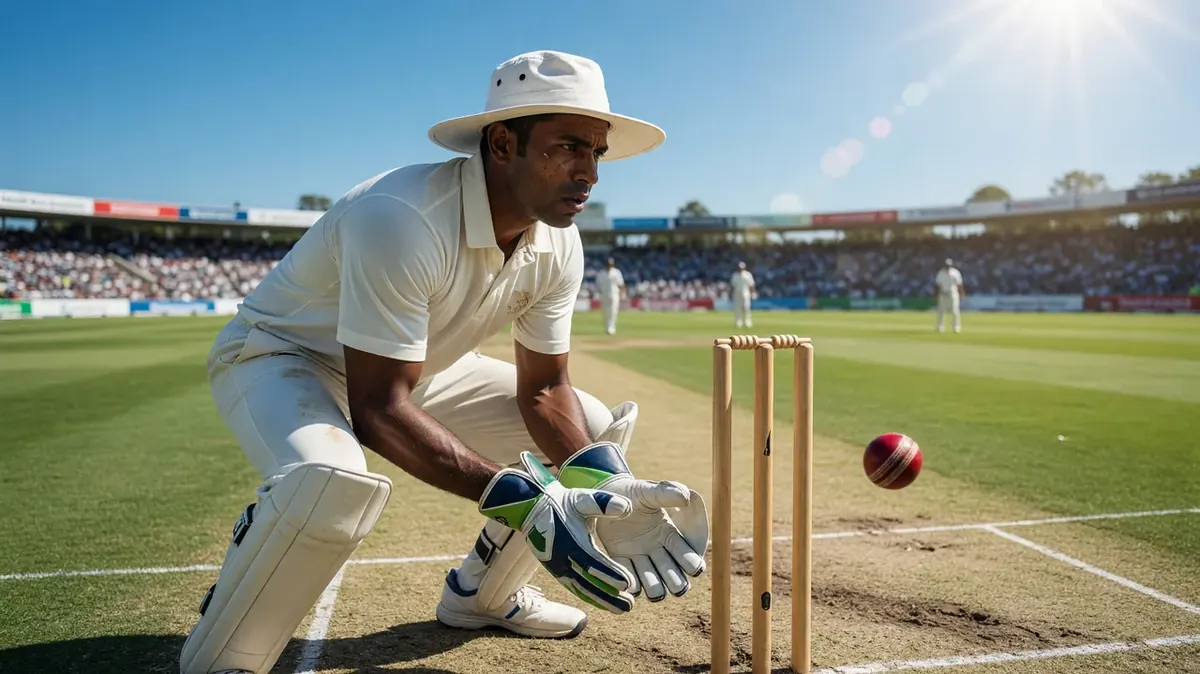
Venues matter because pitches and outfields differ. A green seamer in the early season rewards fast bowlers and rewards top-order bats who can survive the new ball. A dry, spinning track in the middle of the season rewards spinners and rewards bats who can rotate strike. A flat, batting-friendly track rewards ceiling and rewards bats who bat through. The weather matters because dew makes the ball harder to grip for spinners in evening matches, which tilts the second innings towards the chasing side.
The desk's approach to venues is to read three inputs before the match: the surface, the weather, and the toss. The toss is the only one of the three that is not knowable in advance, and it is the only one that can change every other input. Wait for the toss, then read the lineup, then pick the captain.
The toss and the dew factor
The toss is the most underrated input in fantasy cricket. A team that wins the toss and bowls first in a dew-heavy evening match has a structural advantage: the bowlers grip the ball better in the first innings, and the chase is easier under lights. A team that wins the toss and bats first on a flat track is betting on a defensible total, not on a chase. The desk's match previews always include a note on the toss, and a flag for what could change after the toss.
Reading contest size and structure
Contests vary widely in entry fee, in maximum entries, and in prize structure. A small contest with a high first prize is high-variance: the field is small, the leaderboard is volatile, and a strong captaincy pick is the difference between first and tenth. A large contest with a more modest prize rewards ceiling over floor: the top of the leaderboard is the only part that pays, and a moderate captaincy pick at a high ceiling can climb past a strong captaincy pick at a moderate ceiling. Read the contest before you read the lineup.
Bankroll and loss limits
Bankroll is the total amount you have set aside for fantasy play. The desk's position on bankroll is conservative: treat it as an entertainment budget, not as an investment. Set a weekly loss limit before you start, and stop when the limit is hit. Use the platform's self-exclusion tool if you need to. The responsible-play page collects the tools and the contact details in one place.
Fantasy cricket is a skill game, and the skill is the reason. The reason is what you write in the margin of the lineup. Write it down.
Read a pre-match preview
Move from the evergreen guide to a dated preview with venue, conditions, probable XI, risk flags, and a post-toss update.
How to read a venue you have never played at
A new venue is a venue the desk has not covered. The desk's reading of a new venue is conservative: read the surface, read the weather, read the toss, and read the squad. The four reads are the inputs the desk recommends, and the inputs are the difference between a guess and a bet. The desk does not publish a hot take on a new venue, and the desk does not recommend a specific player at a new venue. The reason is the same as the mid-season rule change: a hot take is a guess, and a guess is not the product.
How to read a player you have never picked before
A new player is a player the desk has not covered. The desk's reading of a new player is conservative: read the role, read the recent usage, read the match-up, and read the form. The four reads are the inputs the desk recommends, and the inputs are the difference between a guess and a bet. The desk does not publish a hot take on a new player, and the desk does not recommend a specific lineup that includes a new player. The reason is the same: a hot take is a guess, and a guess is not the product.
How to read the IPL in 2026
The IPL in 2026 is the same as the IPL in 2025, with one change: the schedule. The desk's reading of the IPL is conservative: read the schedule, read the venues, read the squads, and read the form. The four reads are the inputs the desk recommends, and the inputs are the difference between a guess and a bet. The desk does not publish a hot take on the IPL, and the desk does not recommend a specific player. The reason is the same: a hot take is a guess, and a guess is not the product.
How to read the ODI World Cup in 2027
The ODI World Cup in 2027 is a year away. The desk's reading of the World Cup is conservative: read the schedule, read the venues, read the squads, and read the form. The four reads are the inputs the desk recommends, and the inputs are the difference between a guess and a bet. The desk does not publish a hot take on the World Cup, and the desk does not recommend a specific player. The reason is the same: a hot take is a guess, and a guess is not the product.
How to read the T20 World Cup in 2026
The T20 World Cup in 2026 is six months away. The desk's reading of the World Cup is conservative: read the schedule, read the venues, read the squads, and read the form. The four reads are the inputs the desk recommends, and the inputs are the difference between a guess and a bet. The desk does not publish a hot take on the World Cup, and the desk does not recommend a specific player. The reason is the same: a hot take is a guess, and a guess is not the product.
How the desk handles a format the desk has not covered
The desk treats a new format as a public document, and the public document is the source of truth. The desk's reading of a new format is conservative: read the format, compare the format to the formats covered here, and write a one-paragraph note on the differences. The note is the input the desk recommends, and the input is the difference between a guess and a bet. The desk does not publish a hot take on a new format, and the desk does not recommend a specific player in a new format. The reason is the same: a hot take is a guess, and a guess is not the product.