
Dated previews, with the post-toss update you actually need.
The preview template is fixed. The inputs change. The desk publishes venue, conditions, probable XI, risk flags, and a post-toss update placeholder for every preview, with sources and timestamps.
On this page
The preview methodology
The desk's preview template is fixed because the inputs are fixed. Every preview covers: venue and surface, weather and dew likelihood, the probable XI for both teams, the role changes since the last match, the captaincy matrix, and a risk-flag section for what could invalidate the preview. The post-toss update placeholder is the only part that is allowed to change after publication.
Sources and timestamps
Every input has a source and a retrieval time. The desk does not paste a stat without a link, and it does not paraphrase a number without saying where the number came from. The source drawer at the bottom of every preview is the place to check, and the editorial policy page describes the rule in detail.
Confidence labels, defined
The desk uses three confidence labels: high, medium, and low. High means the input is verifiable from at least two independent sources. Medium means the input is verifiable from one source plus a recent pattern. Low means the input is a reasoned estimate, not a verified fact. The labels are not predictions of the match result; they are descriptions of the input quality.
What changes after the toss
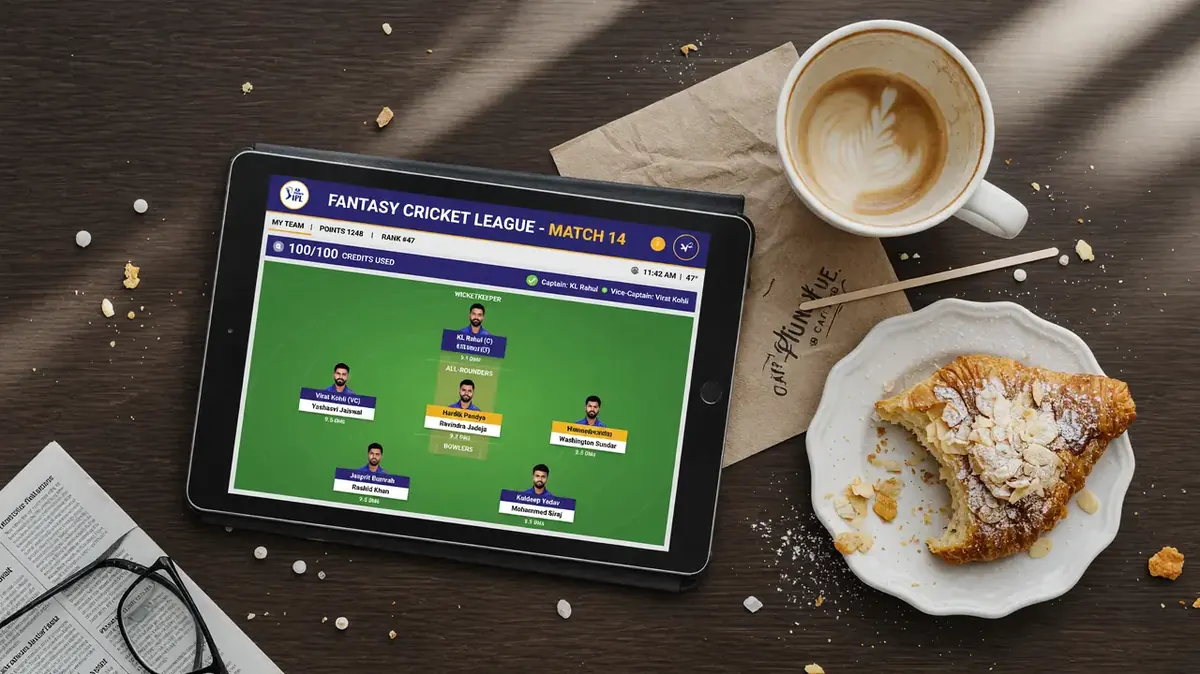
The toss is the most common reason a preview needs an update. A team that wins the toss and bowls first in a dew-heavy evening match changes the math for every captaincy pick. The desk publishes a post-toss update when the toss changes the captaincy profile, and it leaves the preview unchanged when the toss confirms the original plan. The update is a short paragraph, not a rewrite.
Bankroll, contest size, and the lock window
The lock window is the time between the toss and the deadline. Most platforms allow edits until the deadline. The desk recommends locking the lineup at the deadline, not the lock. The bankroll rule is the same as the rest of the desk's coverage: set a weekly loss limit before you start, and stop when the limit is hit.
What the desk does not promise
The desk does not promise winning lineups, does not promise a return on investment, and does not accept payment to feature a specific player. The methodology and the corrections policy apply regardless of who pays for a click. The editorial-policy page describes the full rule.
A preview is a structured way to disagree with the field, with reasons. It is not a forecast.
Pair the preview with the captaincy matrix.
The preview tells you what to read. The captaincy matrix tells you how to use the read.
How to read a pre-match preview on a slow news day
A slow news day is the day to read a pre-match preview from a previous match, not to read a current preview. The desk's reading of a previous preview is conservative: read the preview, read the corrections log, and read the post-match review. The three reads are the inputs the desk recommends, and the inputs are the difference between a guess and a bet. The desk does not publish a hot take on a previous preview, and the desk does not recommend a specific player in a previous preview. The reason is the same: a hot take is a guess, and a guess is not the product.
How the desk handles a preview that misses the result
The desk treats a missed preview as a public document, and the public document is the source of truth. The desk's reading of a missed preview is conservative: read the preview, compare the preview to the actual result, and write a one-paragraph note on the differences. The note is the input the desk recommends, and the input is the difference between a guess and a bet. The desk publishes a correction when a missed preview is verified, and the correction is the input the desk recommends reading.
How to read the post-toss update
The post-toss update is the most underrated input in a fantasy match. The post-toss update is published within thirty minutes of the toss, and the update is the input the desk recommends reading before you lock the lineup. The desk's reading of the post-toss update is conservative: read the update, compare the update to the preview, and adjust the captain pick if the adjustment is supported by a reason. The reason is the input the desk recommends, and the input is the difference between a guess and a bet.
How to read the confidence label
The confidence label is a description of the input quality, not a prediction of the match result. The desk uses three confidence labels: high, medium, and low. High means the input is verifiable from at least two independent sources. Medium means the input is verifiable from one source plus a recent pattern. Low means the input is a reasoned estimate, not a verified fact. The desk's reading of the confidence label is conservative: read the label, compare the label to the source, and weight the input accordingly.
How the desk handles a preview on a day with no matches
The desk does not publish a preview on a day with no matches. The desk's reading of a no-match day is conservative: read the corrections log, read the editorial policy, and read the responsible-play page. The three reads are the inputs the desk recommends, and the inputs are the difference between a guess and a bet. The desk does not publish a hot take on a no-match day, and the desk does not recommend a specific player. The reason is the same: a hot take is a guess, and a guess is not the product.
How to read the corrections log on a preview
The corrections log is the input the desk recommends reading on every preview. The log lists the input that was changed, the date of the correction, and a link to the original source the correction was based on. The desk's reading of the corrections log is conservative: read the log, compare the log to the preview, and adjust your future previews accordingly. The adjustment is the input the desk recommends, and the input is the difference between a guess and a bet.
How to read a preview on a format the desk has not covered
A new format is a format the desk has not covered. The desk's reading of a preview on a new format is conservative: read the format, compare the format to the formats on the points system page, and write a one-paragraph note on the differences. The note is the input the desk recommends, and the input is the difference between a guess and a bet. The desk does not publish a hot take on a new format, and the desk does not recommend a specific player in a new format. The reason is the same: a hot take is a guess, and a guess is not the product.
How the desk handles a preview that ignores the format math
The desk treats a preview that ignores the format math as a public document, and the public document is the source of truth. The desk's reading of a format-ignoring preview is conservative: read the preview, compare the preview to the format math, and read the corrections log. The three reads are the inputs the desk recommends, and the inputs are the difference between a guess and a bet. The desk publishes a correction when a format-ignoring preview is verified, and the correction is the input the desk recommends reading.
How to read a preview on a tournament the desk has not covered
A new tournament is a tournament the desk has not covered. The desk's reading of a preview on a new tournament is conservative: read the tournament, compare the tournament to the tournaments on the tournaments page, and write a one-paragraph note on the differences. The note is the input the desk recommends, and the input is the difference between a guess and a bet. The desk does not publish a hot take on a new tournament, and the desk does not recommend a specific player in a new tournament. The reason is the same: a hot take is a guess, and a guess is not the product.
How the desk handles a preview that ignores the tournament context
The desk treats a preview that ignores the tournament context as a public document, and the public document is the source of truth. The desk's reading of a context-ignoring preview is conservative: read the preview, compare the preview to the tournament context, and read the corrections log. The three reads are the inputs the desk recommends, and the inputs are the difference between a guess and a bet. The desk publishes a correction when a context-ignoring preview is verified, and the correction is the input the desk recommends reading.
How to read a preview on a venue the desk has not covered
A new venue is a venue the desk has not covered. The desk's reading of a preview on a new venue is conservative: read the venue, compare the venue to the venues on the points system page, and write a one-paragraph note on the differences. The note is the input the desk recommends, and the input is the difference between a guess and a bet. The desk does not publish a hot take on a new venue, and the desk does not recommend a specific player in a new venue. The reason is the same: a hot take is a guess, and a guess is not the product.
How the desk handles a preview on a day with no matches
The desk does not publish a preview on a day with no matches. The desk's reading of a no-match day is conservative: read the corrections log, read the editorial policy, and read the responsible-play page. The three reads are the inputs the desk recommends, and the inputs are the difference between a guess and a bet. The desk does not publish a hot take on a no-match day, and the desk does not recommend a specific player. The reason is the same: a hot take is a guess, and a guess is not the product.