
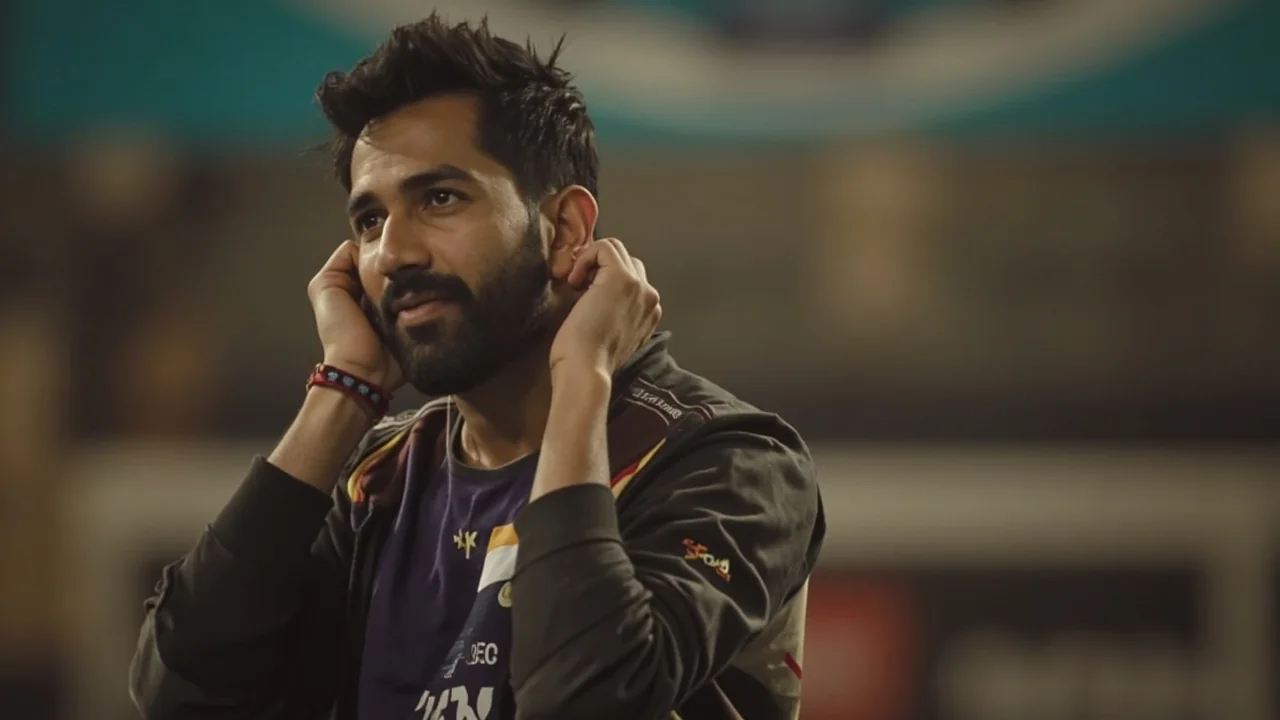
Direct answer: fantasy price discovery needs three inputs, an indicator of current form, a baseline of expected output and a probability that the player moves between teams. By 13 August 2026 fantasy readers had the first two for Hardik Pandya (a 206-run, four-wicket line across ten IPL 2026 matches and a Mumbai Indians side that finished ninth with four wins from fourteen) and, through Ravichandran Ashwin's named trade packages, a credible sketch of the third. The price a fantasy reader was willing to put on Pandya for the next cycle depended less on the KKR clip itself and more on how those three inputs moved together between mid-August and the trade window.
Why fantasy price discovery needed a catalyst
A fantasy price tag is not a single number. It is the output of three signals stacked on top of each other: where the player finished the last season, how the player's franchise finished the last season, and the probability that the player moves to a different franchise before the next cycle. The first two are public on the morning after the final. The third is rarely public at all, because the IPL trade window sits between two seasons and the conversations inside it are private.
For most of the IPL 2026 off-season, fantasy readers had only the first two signals for Hardik Pandya: a 206-run, four-wicket return across ten matches and a Mumbai Indians table finish of ninth in a ten-team league with four wins from fourteen. Those two numbers do not by themselves force a price move. Pandya has had down seasons before and bounced back. A ninth-place finish is a fact, not a forecast. The price would not move until the third signal arrived in some readable form.
What the KKR 'Wait for it' clip did on 13 August 2026 was lower the cost of finding that third signal. The clip itself was not a transfer. It was a 32-second piece of social-media staging: Pandya walking past KKR spinner Varun Chakravarthy at the BCCI Centre of Excellence and teasing him, captioned 'Wait for it' on KKR's official X account, @KKRiders. The clip did not say Pandya was moving. What it said, by being posted at all, was that at least one franchise wanted the conversation to keep happening. A franchise account does not put an opposition captain into a teaser by accident.
The IPL 2026 numbers that set the floor
Any price-discovery conversation has to start from what is on the scorecard. Hardik Pandya's IPL 2026 line was 206 runs and four wickets across ten matches. Per match that is roughly 20 runs and 0.4 wickets. On most fantasy scoring tables that lands Pandya in the role-player band for all-rounders, useful on a points-per-match basis but well below the ceiling that earlier seasons had set.
It is worth being specific about the gap. Across ten matches in IPL 2026, Pandya cleared some of the thresholds fantasy readers usually look at and missed others. The runs-per-match threshold for a captaincy candidate on a standard T20 scoring table sits higher than 20. The wickets-per-match threshold for a bowling all-rounder captain sits higher than 0.4. Strike rate bands are harder to clear at 20 runs a game than at 35, and economy bands are harder to clear when the bowler is operating at a role-player length rather than a powerplay length.
Under Pandya, Mumbai Indians have reached the IPL playoffs only once in three seasons. Three seasons is the right sample for separating noise from trend. Two of those seasons ended in the bottom half of the table. A franchise does not change a captain for a single down year, but two out of three is the kind of pattern that sits on a boardroom agenda before the next auction cycle.
Pandya was 32 at the time the KKR clip was posted. That age detail matters in two directions. It is past the age at which most all-rounders peak. It is also the age at which workload management starts to eat into availability. The competitive silence after IPL 2026, covered below, is read differently when the player is 32 than when the player is 27. Neither reading is conclusive. Both have to be priced in.
Why a 4-10 finish resets the captaincy conversation
Mumbai Indians finished ninth in the ten-team IPL 2026 table with four wins from fourteen matches. The headline is not the position. It is the shape. Fourteen matches is the full league stage. A 4-10 record across that sample is not unlucky. It is earned.
The shape matters because the IPL table rewards sustained wins. A side that goes on a four-match win streak and then loses ten straight ends up in the same band as a side that loses four and wins ten. The points-per-match distribution is what separates playoff teams from non-playoff teams, and a 4-10 team sits well below the cut-off on that distribution. Fantasy readers who treat the table as an early signal for the next cycle had already moved on by the time the KKR clip dropped.
The captaincy conversation inside a franchise is shaped by table position. A 4-10 finish does not by itself trigger a captaincy change. The IPL has retention rules, salary cap rules and a defined trade window. What it does is put the captaincy on the table in a way a slow season does not. The franchise has to decide, in some structured forum, whether to retain the captain for the next cycle or open the conversation. That is a setting fantasy readers can read.
What the table does not do is change a player's contract status. Pandya remained a contracted Mumbai Indians player at the time the KKR clip was posted. Trades in the IPL happen during a defined window, follow league rules on retention, right-to-match and salary cap treatment, and require the two franchises to agree. A 4-10 finish resets expectations. Only a trade window moves a player.
Ashwin's named packages as the price signal
The third input that fantasy price discovery needed was the probability of a move. On 10 August 2026, three days before the KKR clip, former India spinner Ravichandran Ashwin discussed the situation on his Tamil YouTube channel. The relevant part was not the commentary. It was the list. Ashwin said Mumbai Indians should only accept a Pandya trade with KKR if they received Harshit Rana and Rinku Singh.
Naming two specific players turns a rumour into a price. Up to that point the conversation about Pandya was directional: he might move, his franchise had a down season, other franchises had been linked. None of that was tradable. The moment Ashwin named Harshit Rana and Rinku Singh, fantasy readers had a working price. Harshit Rana is a death-overs seamer with a defined role in KKR's XI. Rinku Singh is a middle-order batter with a defined finishing role. Either name by itself would be a serious offer. Both together would be a package that gives Mumbai Indians two role-specific replacements in one trade.
Ashwin also referenced two other packages doing the rounds. Chennai Super Kings were reported to be offering Shivam Dube and a pacer. KKR, in a separate package, were reported to be offering Cameron Green. Ashwin added a complication to the Green option: Green might prioritise the Ashes next year, which would alter his availability and therefore his fantasy value for any franchise that landed him. None of the three packages had been confirmed at the time of the original report. Each was a named rumour attached to a named source.

The fantasy read on a named trade list is the same as the read on a confirmed transfer. Treat it as a probability distribution rather than a certainty, but a named list changes the centre of that distribution. The most likely outcome at the time of the original report was that Pandya would remain a Mumbai Indians player through the next season, with the trade window narrowing only if both franchises agreed on a package and the league approved it. The Ashwin list was the first public signal that narrowed that window.
The post-IPL competitive silence and its effect on price
Hardik Pandya had not played competitive cricket since the end of IPL 2026 at the time the KKR clip circulated. That detail looks small in a paragraph and behaves large in a price model. The IPL is a long tournament. Players normally cycle into bilateral international cricket, domestic red-ball cricket, or county stints in the months that follow. A clean absence through mid-August is not a routine off-season break. It is an unaccounted-for gap on the fixture calendar.
The fantasy read is mechanical. A player who is not playing is not scoring points. Captaincy multipliers on a silent player produce nothing. Even a low-weight vice-captaincy choice produces nothing. Most fantasy pricing engines weight recent appearances and recency-weighted form. By mid-August, the market had stopped pricing Pandya as an in-season certainty and started pricing him as a question mark. The longer the silence, the more aggressive that discount becomes.
It also reset the news cycle around him. A player who is playing cannot be traded mid-season in most franchise leagues. A player who is resting can be the subject of a conversation that ends in a trade window rather than a selection panel. The KKR clip did not create that opening. It landed inside an opening the silence had already made.
A working framework for pricing Pandya and the linked players
Putting the three signals together, the practical effect on a fantasy price tag by 13 August 2026 came down to four working assumptions. Each was supported by the source material. Each had a clear test that would either confirm or break it before the next auction cycle opened.
First, treat Pandya's price as a function of the trade probability rather than a function of last season's scorecard. The 206-run, four-wicket return is the floor, not the ceiling. Any move that put Pandya into a stronger XI on paper would have re-rated the price upward; any move that put him into a weaker XI would have re-rated it down. Harshit Rana and Rinku Singh going to Mumbai Indians would have created a Pandya-shaped hole at KKR that the franchise would have to fill, and the fill would have set Pandya's expected fantasy output in his new XI.
Second, price the linked players individually rather than as a bundle. Harshit Rana, Rinku Singh, Shivam Dube and Cameron Green each had their own fantasy profiles, and a move for any of them would have changed more than one lineup. Dube is a power-hitting left-hander with a defined middle-order role and a strike rate that fantasy engines weight heavily. Green is a seam-bowling all-rounder whose availability is partially a function of the Ashes schedule, which Ashwin flagged in his commentary.
Third, hold captaincy plans on the players whose fixtures you can see. The trade window had not opened when the video was posted, and the source material did not establish that any of the named packages had been agreed. Locking captaincy on a transfer-dependent assumption is the most common fantasy error in the months between seasons, and the August 2026 situation was no exception.
Fourth, treat franchise social-media posts as conversation markers rather than news. The KKR clip did not transfer a player. It kept a conversation alive. Conversations matter because they shape the trade offers that get made when the window opens, and trade offers shape the universe of players a fantasy reader has to pick from at the next auction.
None of these assumptions required the KKR clip to be true. The clip only needed to be evidence that the conversation was live. A live conversation is a price-relevant input. That is the read a fantasy cricket reader could publish on 13 August 2026 without overstating what had been confirmed. A week later, the same read still held unless something had changed.
What the source does not let a fantasy reader conclude
Several things cannot be settled from the source material on its own. No transfer had been confirmed at the time of the original Yahoo Sports report. The rumoured trade packages named by Ashwin were attributed to him, not to either franchise, and none had been approved by the league. Pandya's individual IPL 2026 line and Mumbai Indians' table finish were confirmed, and his absence from competitive cricket after the season was confirmed, but the cause of that absence was not stated in the source.
The most that can be said honestly is that the source established a fact pattern: a franchise video, a table position, a player line, a competitive silence and a named source naming trade terms. Whether that pattern ends in a trade or in a retained captain depends on information the source did not contain. The fantasy price has to stop where the evidence stops, even when the conversation does not.
A second limit is calendar. The IPL's trade window sits in a defined period between the end of one season and the start of the next. Outside that window, rumours can circulate without resolution for weeks. Fantasy readers who act on the rumour before the window opens are pricing in information that may not survive contact with the trade committee. The right read on 13 August 2026 was that the conversation was live. The right read on 22 August 2026, the date of this retrospective, is the same unless a trade has been formally announced.
Retrospective note: the retrospective looks back at a story first reported on 13 August 2026 and uses the source as the factual ceiling. Player movement, trade terms and franchise decisions reported after that date are not asserted here, and the fantasy cricket reference guide remains the primary reading on format, scoring and selection frameworks for the next auction cycle.
Common questions on the KKR clip and the August 2026 silence
What exactly did the KKR video show?
Kolkata Knight Riders posted a video on their official X account captioned 'Wait for it'. The footage shows KKR spinner Varun Chakravarthy exercising at the BCCI Centre of Excellence while Hardik Pandya walks past him from behind and teases him. The clip runs for roughly half a minute.
What were the named trade packages?
Ravichandran Ashwin said on his Tamil YouTube channel that Mumbai Indians should only accept a Pandya trade with KKR if they received Harshit Rana and Rinku Singh. He also referenced separate rumoured packages involving Shivam Dube and a pacer from Chennai Super Kings, and Cameron Green from KKR, with Ashwin noting Green might prioritise the Ashes.
What were Hardik Pandya's IPL 2026 numbers?
Pandya scored 206 runs and took four wickets across ten matches in IPL 2026. Across those matches the per-match average worked out to roughly 20 runs and 0.4 wickets. The line lands in the role-player band for all-rounders on most fantasy scoring tables.
When did Pandya last play competitive cricket?
At the time the source was published, Pandya had not played competitive cricket since the end of IPL 2026. The cause of that absence was not stated in the source.
How did Mumbai Indians finish IPL 2026?
Mumbai Indians finished ninth in the ten-team IPL 2026 standings with four wins from fourteen matches. Under Hardik Pandya, Mumbai Indians have reached the IPL playoffs only once in three seasons.
Did any of the trade packages get confirmed?
No trade was confirmed in the source. The packages Ashwin named were attached to him, not to either franchise, and none had been approved by the league at the time the report was published.
What a fantasy reader should track next
The single habit worth carrying forward from this story is the discipline of separating price from narrative. The KKR clip was narrative. Ashwin's named packages were price. Both were on the table at the same time, and a fantasy reader who priced Pandya on narrative alone would have re-rated him on the wrong basis. Track the next confirmed event rather than the next teaser: a trade-window opening announcement from the league, an official retention list, or a franchise statement naming a move. Anything before that is positioning, and positioning is information only because it sets the price of the next piece of information you actually need.